


Which heat exchanger is better: Correct operation steps for heat exchangers
Release Time:
2020-09-25 12:34
Source:
Heat exchanger units are mainly used in schools, factories, hotels, and residential buildings due to their compact structure, safe and reliable operation, and ease of use. So, how to operate a heat exchanger unit correctly? The manufacturer has summarized the following steps.
1 Close all valves on one side of the heat exchanger unit and open the valves on the other side; close the valves at the interface of one side of the plate heat exchanger and fully open the bypass valve on the other side.
2 When using the electric control cabinet water pump control button, check one by one whether the direction of rotation of the water pump motor is consistent with the direction of the arrow, and whether the water pump is working properly; open the other side of the circulation pump, it needs to rotate for a while to remove debris and air from the pipeline.
3 Adjust the opening degree of the bypass valve to meet the inlet and outlet pressure difference requirements of the heat exchanger unit. After adjustment, fix the valve opening degree and record it; fully open the bypass valve on the outlet condensate pipeline and slowly open the bypass valve on the inlet steam pipeline.
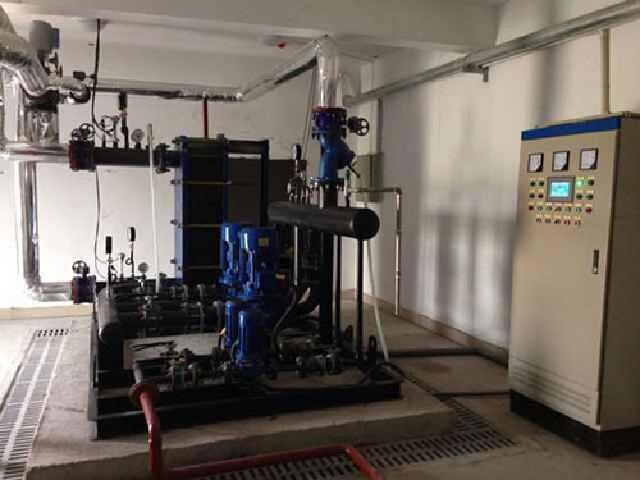
4 When the heat medium is high-temperature water, fully open the outlet valve and slowly open the bypass valve of the inlet pipe; when opening the inlet valve, pay attention to the temperature change and operating condition of the heat exchanger unit. Close the inlet valve immediately if any problems occur.
5 Use an automatic controller to control the water temperature and check whether the switch position of the electric valve matches the actual requirement.
6 Close the bypass valve on the inlet pipeline, then open the electric valve, and slowly open the electric valve front door, paying attention to the use of the temperature control valve and the change in water temperature.
7 To shut down the heat exchanger, first close the valves before and after the inlet electric valve, then close the other side circulation pump.
Related News
Moments from the "United in Heart, Creating Glory" 2025 Shandong Youkun Annual Conference
Moments from the "United in Heart, Creating Glory" 2025 Shandong Youkun Annual Conference
Vice Mayor Shu Huawen visits and investigates Shandong Youkun
During this period, the person in charge of our company gave an on-site report on the company's operation and the strict implementation of various requirements and measures for the prevention and control of the novel coronavirus pneumonia epidemic, which was unanimously praised by the leaders!
On September 22nd, a completion and commissioning ceremony was held at Shandong Youkun Energy Equipment Co., Ltd. in Kenli Economic Development Zone. With the general manager's starting order, the sound of machinery could be heard continuously.
Heat Exchanger Unit Manufacturer: Characteristics of Boiler Auxiliary Equipment
Boiler auxiliary equipment actually refers to a complete set of equipment for a boiler. This is a relatively general concept, including induced draft fans, fans, pulverizers, coal feeders, slag removal machinery, etc. Next, we will introduce the characteristics of boiler auxiliary equipment one by one to help you better understand boiler auxiliary equipment.
Heat exchanger manufacturer: Burners in boiler auxiliary equipment
Burners are among the auxiliary equipment of boilers. A burner includes an ignition system, an air supply system, a monitoring system, a fuel system, an electrical control system, etc. The air supply system sends a certain amount of air into the combustion chamber. Its main components include a fan, impeller, casing, motor, damper controller, diffuser, etc. This article will introduce the burner in boiler auxiliary equipment in detail, helping you better understand its performance and structure.
How is the pressure vessel industry developing?
Encouraged by national cultural industry economic policies, the metal pressure vessel industry benefits from relevant information industry policies and national industrial policies. A favorable analysis of the industrial policy environment is conducive to the sustained development of this industry in the future.