


Cleaning methods for reverse osmosis equipment
Release Time:
2021-07-11 13:26
Source:
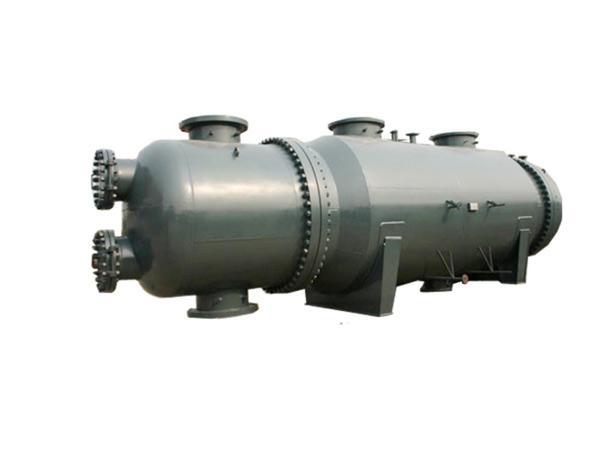
Reverse osmosis technology, due to its special advantages, has become increasingly widely used, so as long as it is done well Reverse osmosis equipment management, because its cleaning problems may cause losses for many users with weak technical capabilities, serious problems can be avoided. Let's learn about the cleaning methods of reverse osmosis equipment below!
1. Low-pressure cleaning of reverse osmosis equipment
Regularly perform high-flow, low-pressure, low-pH cleaning of the reverse osmosis equipment. Low-pressure cleaning should be performed, and the power should be turned on only after the SDI value is qualified, which helps to remove the fouling attached to the membrane surface and maintain membrane performance. Or when the SDI of the reverse osmosis equipment suddenly increases by more than 5.5 after the water inflow.
2 . Reverse osmosis equipment shutdown protection
Due to changes in production, reverse osmosis equipment inevitably stops frequently. Improper handling can lead to reduced and irreversible membrane performance. Protective measures must be taken during short-term or long-term shutdowns.
Short-term storage is suitable for systems that stop for less than 15 days. The reverse osmosis equipment can be protected by low-pressure cleaning every 1-3 days. Practice shows that when the water temperature reaches above 20°C, Reverse osmosis equipment water will become smelly and deteriorate after 3 days of storage, breeding a large number of bacteria. Therefore, when the water temperature is higher than 20°C, it is recommended to perform low-pressure cleaning every 2 or 1 day, and when the water temperature is lower than 20°C, low-pressure cleaning can be performed every 3 days. All inlet and outlet valves of the reverse osmosis device of the water purification equipment should be closed after each cleaning.
3. Chemical cleaning of reverse osmosis membrane
These substances accumulate on the membrane surface, causing a decrease in the output of the reverse osmosis device of the water purification equipment, a decrease in the desalination rate, and an increase in the differential pressure, thereby restoring good water permeability and desalination performance. Under normal operating conditions, the reverse osmosis membrane may also be polluted by inorganic scale, colloids, microorganisms, metal oxides, etc.
Reverse osmosis membrane separation technology is the reverse process of osmosis. The principle is that water and solution are separated by a permeable membrane, and water permeates into the solution, with osmotic pressure between the two phases. When a pressure greater than the osmotic pressure is applied to the solution, the water in the solution phase will permeate in the opposite direction to the water. The concentration of water-soluble substances and suspended solids that do not pass through the membrane gradually increases. Usually cleaned every 3-12 months, but when cleaned once a month, desalinated water is obtained using reverse osmosis, that is, after the raw water passes through the membrane under sufficient pressure, it becomes pure water. List the pretreatment system to be improved and the adjusted operating parameters. In the case of needing cleaning once every 1-3 months, the operation level of the equipment needs to be improved. It is difficult to judge whether the pretreatment system needs to be improved.
The above is an introduction to Reverse osmosis equipment cleaning methods. Our company is a manufacturer of plate heat exchangers, heat exchanger units, and heat exchangers. Our main business includes water treatment equipment, sewage treatment projects, heat exchanger units, heat exchangers, reverse osmosis equipment, pressure vessels, water supply equipment, and plate heat exchangers. For the best heat exchangers and plate heat exchangers, please choose us.
Related News
Moments from the "United in Heart, Creating Glory" 2025 Shandong Youkun Annual Conference
Moments from the "United in Heart, Creating Glory" 2025 Shandong Youkun Annual Conference
Vice Mayor Shu Huawen visits and investigates Shandong Youkun
During this period, the person in charge of our company gave an on-site report on the company's operation and the strict implementation of various requirements and measures for the prevention and control of the novel coronavirus pneumonia epidemic, which was unanimously praised by the leaders!
On September 22nd, a completion and commissioning ceremony was held at Shandong Youkun Energy Equipment Co., Ltd. in Kenli Economic Development Zone. With the general manager's starting order, the sound of machinery could be heard continuously.
Heat Exchanger Unit Manufacturer: Characteristics of Boiler Auxiliary Equipment
Boiler auxiliary equipment actually refers to a complete set of equipment for a boiler. This is a relatively general concept, including induced draft fans, fans, pulverizers, coal feeders, slag removal machinery, etc. Next, we will introduce the characteristics of boiler auxiliary equipment one by one to help you better understand boiler auxiliary equipment.
Heat exchanger manufacturer: Burners in boiler auxiliary equipment
Burners are among the auxiliary equipment of boilers. A burner includes an ignition system, an air supply system, a monitoring system, a fuel system, an electrical control system, etc. The air supply system sends a certain amount of air into the combustion chamber. Its main components include a fan, impeller, casing, motor, damper controller, diffuser, etc. This article will introduce the burner in boiler auxiliary equipment in detail, helping you better understand its performance and structure.
How is the pressure vessel industry developing?
Encouraged by national cultural industry economic policies, the metal pressure vessel industry benefits from relevant information industry policies and national industrial policies. A favorable analysis of the industrial policy environment is conducive to the sustained development of this industry in the future.