


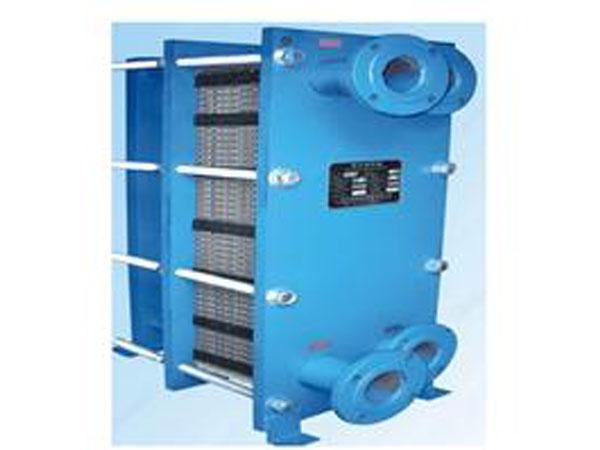
Which manufacturer makes the best plate heat exchanger?
Keywords:
Product Category:
Shandong Youkun Energy Equipment Co., Ltd. is a high-tech enterprise integrating scientific research, production, manufacturing, and installation services. The company's main products include water supply equipment, pressure vessels, reverse osmosis devices, reverse osmosis equipment, heat exchangers, heat exchanger units, plate heat exchangers, water treatment equipment, water tanks, sewage treatment projects, sewage treatment equipment, environmental protection projects, energy equipment, boiler auxiliary machinery, boiler auxiliary equipment, etc. The company has more than ten years of experience in producing heat exchangers, reverse osmosis, and sewage treatment equipment, and has rich experience in heat transfer, sewage treatment, and water treatment. It is a high-tech enterprise in Shandong Province, with a number of technological innovations applying for patents, and a number of technological achievements have been widely used in production and life.
Plate heat exchangers have advantages such as high heat transfer coefficient, compact structure, small footprint, flexible operation, wide application range, small thermal resistance loss, convenient installation and use, and low investment cost. Therefore, they are widely used in petroleum, chemical, thermal power, metallurgy, light textile, food, medicine, HVAC heating, nuclear industry, shipbuilding, and ocean development.
With the development of modern industry, the rational use of energy and environmental protection are the primary issues to be solved by countries all over the world. Plate heat exchangers, as highly efficient heat exchange products in the heat exchange field, have long been valued by manufacturers at home and abroad. Our company has learned from and absorbed the advanced technologies of similar industries at home and abroad, and has cooperated with universities to research and develop efficient, durable plate heat exchangers with internationally advanced levels. The plates adopt a unique non-stick pad structure, and the processing of the plates adopts a unique process, which increases the operating pressure, operating temperature, and service life of the plate heat exchanger. We have independently developed plate types suitable for different media and flow rates, expanding the application range, greatly reducing investment costs, and improving the heat transfer coefficient. The use of industrial automatic assembly lines has improved product quality, enhanced reliability and credibility, and received favorable comments from a large number of users.
The plate heat exchanger is mainly composed of heat transfer plates, sealing gaskets, pressure plates, upper and lower guide rods, pillars, clamping studs, and bolts. The four corners of the heat transfer plates have corner holes and are inlaid with sealing gaskets. When the equipment is clamped, the sealing gaskets seal and connect the heat transfer plates in a process-combined manner, and the corner holes are interconnected to form a labyrinth-like medium channel, so that the heat exchange medium flows in opposite directions in adjacent channels, and heat exchange is fully performed through enhanced heat convection and heat conduction.
Due to the special structure of the heat transfer plates, strong turbulence can be excited at a relatively low flow rate (Re=200) after assembly, thus expanding the degree of destruction of the fluid boundary layer and enhancing the heat transfer process.
The operating pressure of the plate heat exchanger is generally 1.0 MPa to 1.6 MPa, and the operating temperature is generally below 160 ℃. When used for steam heating or condensation, a temperature-reducing tube heat exchanger is generally added to the plate heat exchanger to cool down and protect the gasket of the plate heat exchanger and increase the steam processing capacity. The material of the heat transfer plate is generally stainless steel; the sealing gasket generally uses materials such as nitrile rubber, ethylene propylene rubber, nitrile food rubber, and fluororubber. The heat transfer plates and sealing gaskets can also choose other materials according to the different needs of users.
Main technical features of plate heat exchangers:
1. High heat transfer efficiency
The corrugated structure design of the heat transfer plate is reasonable, which is conducive to enhancing heat transfer and allows the medium to form a strong turbulent state at a lower flow rate. The flow channel uses rounded corners to avoid dead zones, greatly reducing the possibility of scaling, and achieving high heat transfer efficiency.
2. Long service life
The heat transfer plate adopts a non-stick pad structure, avoiding the corrosion of the heat transfer plate by the adhesive; when the heat transfer plate is stretched and formed, a new non-simultaneous molding process is used to ensure uniform stretching of the plate, precise corrugation size, and uniform corrosion resistance and mechanical strength of the heat transfer plate. This prolongs the service life of the plate heat exchanger. The design service life of our company's plate heat exchangers is 15 years.
3. Good strength performance
The heat transfer plate flow channels are reinforced on all four sides; the corrugation size is reasonable; the contact points are evenly distributed. The pressure resistance is increased, and the maximum can reach 2.5 MPa.
4. Low pressure drop
The corrugated direction at the corner holes of the heat transfer plate scientifically adopts a streamlined design, avoiding flow dead zones, and increasing the equivalent diameter of the flow channel.
5. Safe and reliable operation
The plate heat exchanger sealing gasket uses a double-seal structure, with small deformation and good elasticity under the clamping state of the plate. The gasket sealing is reliable after assembly and maintenance reassembly, and there is no internal leakage in the heat exchanger. If there is external leakage, it can be found and handled in time. The sealing gasket ages slowly.

Welcome to Leave a Message