



Boiler auxiliary equipment - low pressure heater
Keywords:
Product Category:
Product Applications
Low-pressure heaters are major auxiliary equipment in the thermal system of power plant steam turbines. Located between the condenser and the boiler deaerator, they utilize steam extracted from the turbine to heat boiler feedwater, thus improving the unit's thermal efficiency.
Structural Features
The low-pressure heaters designed and manufactured by our company draw on and incorporate advanced technologies from home and abroad, featuring diverse structures and reliable quality and performance.
(Structural Design: Computer-optimized to meet the strength and thermal balance requirements of the unit's parameters.
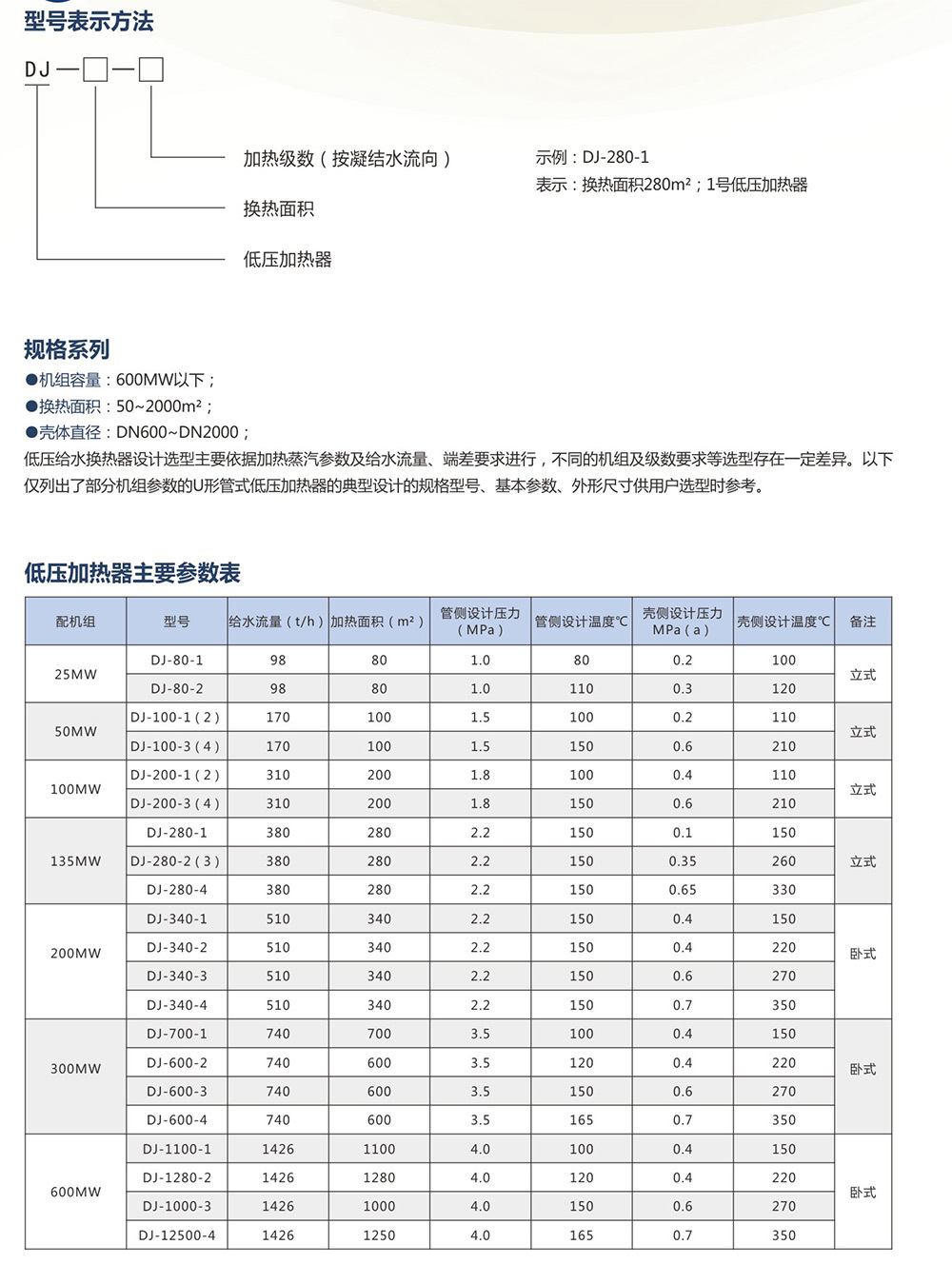
● Water Chamber Structure: Generally a cylindrical structure, the flange bolt connection or welding of the tube plate varies with the diameter and pressure.
● Shell-Side Structure: Depending on the heating steam parameters and the upper and lower differential requirements of the feedwater, single-stage or two-stage designs are employed.
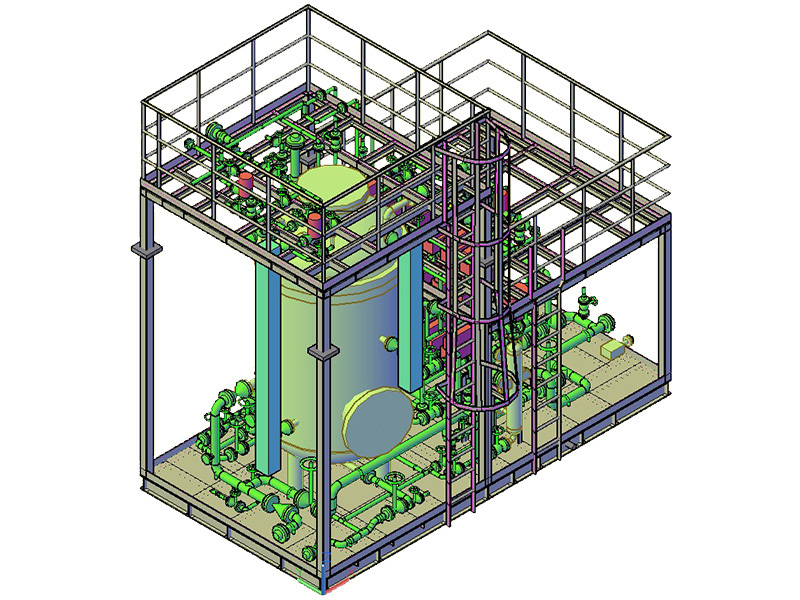
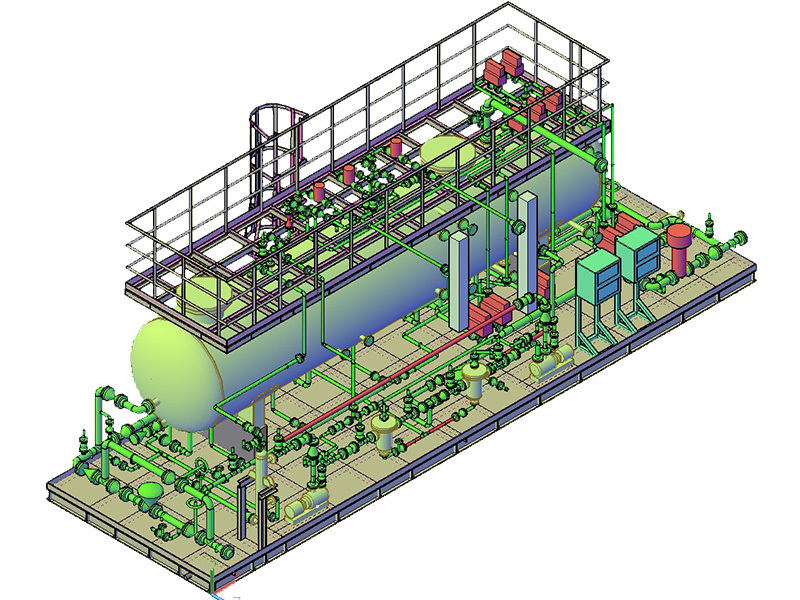
● Installation types include: vertical upright and horizontal.
● The number of low-pressure stages can be designed as two, three, or four, depending on the size of the unit and the requirements of the turbine manufacturer; a two-stage combined design is also possible for counter-flow units.
● Heat exchange tube materials include: stainless steel tubes, brass tubes, and carbon steel tubes.
● Heat exchanger specifications: Φ16, Φ19, etc., "U"-shaped or straight tube type.
● The connection method between the heat exchanger and the tube plate: multiple combinations such as strength welding plus expansion, strength expansion plus sealing welding, and strength expansion.
● Key Processes: The processing of tube plates, erosion prevention at the water chamber inlet, the quality of the connection between the heat exchange tubes and the tube plate, the sealing of the drain cooling section, and tube bundle vibration all have strict and reliable protective measures and advanced processing equipment and quality inspection to ensure quality.
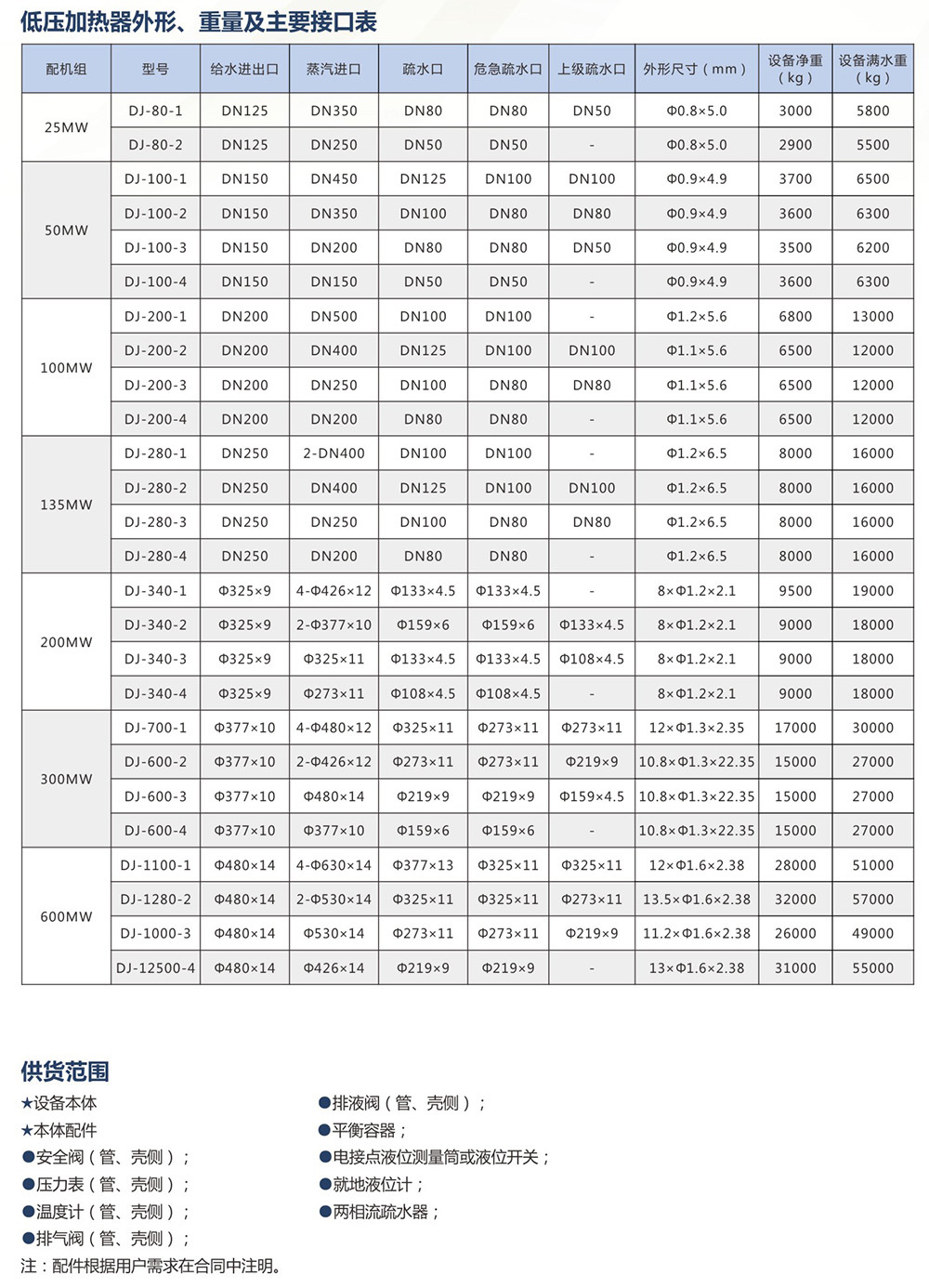
Arrangement of various interface pipe seats of the low-pressure heater
● Boiler feedwater inlet and outlet on the tube side;
● Shell-side safety valve interface;
● Tube-side safety valve interface;
● Shell-side startup and operation vent interface;
● Temperature and pressure measurement ports at the inlet and outlet of the tube and shell side;
● Shell-side drain interface;
● Tube-side vent and drain interface;
● Temperature and pressure measurement port at the inlet of the shell-side fluid;
● Shell-side steam inlet;
● Condensate level control port (equilibrium vessel, electrical contact level control, on-site level display);
● Shell-side drain port;
● Two-phase flow level signal port (two-phase flow drain);
● Upper shell-side drain port;
● Emergency shell-side drain port;
Note: The above interfaces can be set as needed.

Welcome to Leave a Message