


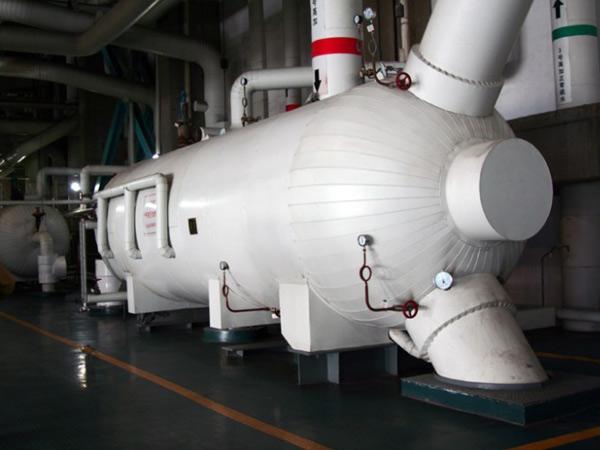
Boiler auxiliary equipment - high pressure heater
High-pressure heater components
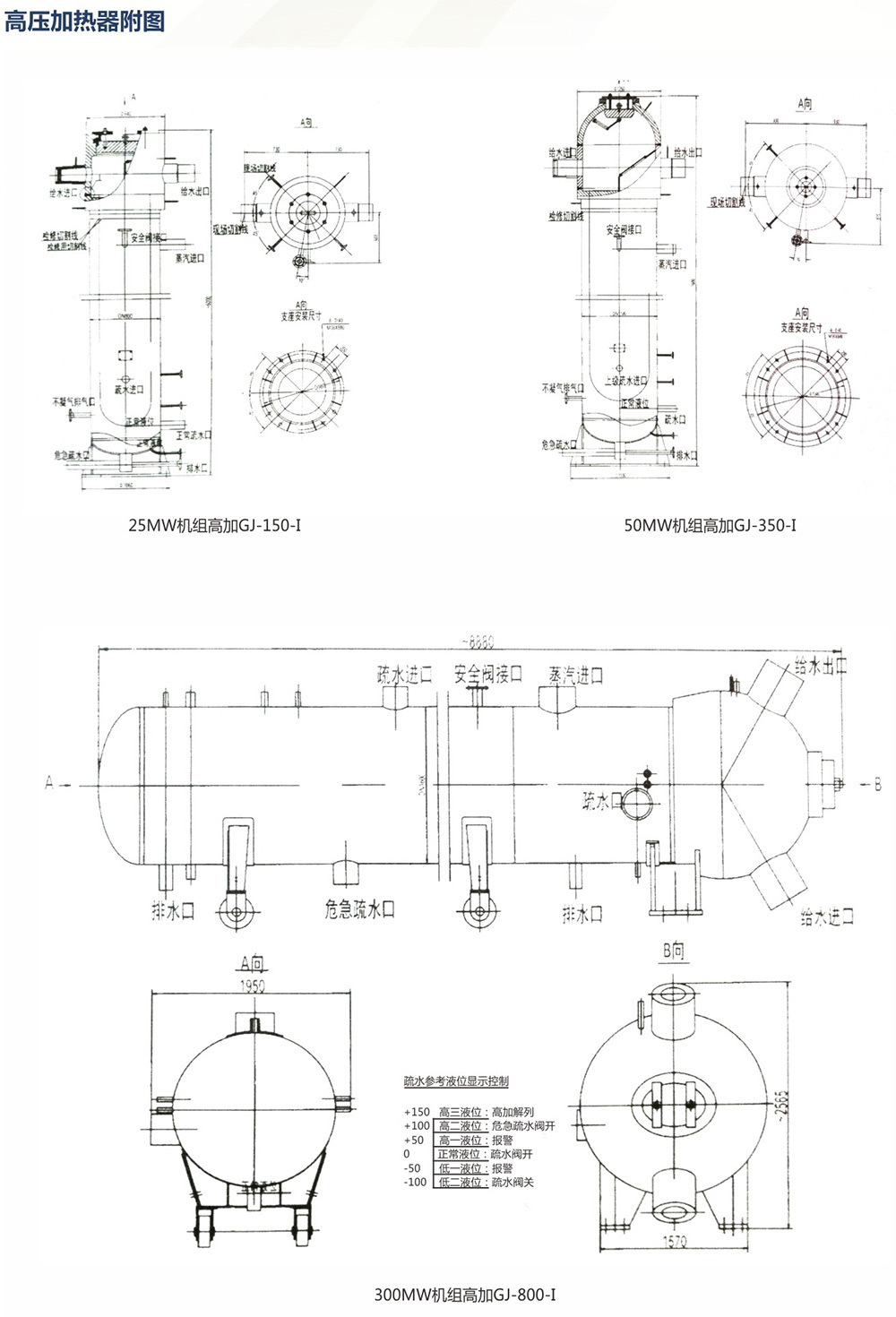
This device consists of two main parts: the shell and the tube system. A steam condensation section is set in the upper part of the shell cavity, and a condensate cooling section is set in the lower part. The feedwater inlet and outlet are set at the top of the inlet and outlet pipes. When superheated steam enters the shell from the inlet, it heats the feedwater in the main tubes above. After the steam condenses into water, the condensed hot water can heat part of the feedwater in the lower condensate cooling tubes. The used condensate flows out of the body through the condensate outlet. This device has significant advantages such as low energy consumption, compact structure, small footprint, and low material consumption. It can also strictly control the condensate water level, condensate flow rate, and reduce the condensate terminal difference.
Keywords:
Product Category:
High-pressure heat exchangers, as heat transfer devices, are mainly used in the reheating systems of large thermal power units. Their heat transfer performance directly affects the economic efficiency and safety of the units. Therefore, improving the heat transfer efficiency of high-pressure heaters and reducing irreversible losses during heat transfer have become important measures for solving energy-efficient utilization. As a physical quantity for evaluating the heat transfer capacity of substances, it has the physical meaning of characterizing heat transfer efficiency and can provide guidance for the efficient operation of high-pressure heaters [1].
High-Pressure Heater Composition
The device consists of two main parts: the shell and the tube system. A steam condensation section is set in the upper part of the shell cavity, and a drain cooling section is set in the lower part. The feedwater inlet and outlet are set at the top of the inlet and outlet water pipes. When superheated steam enters the shell from the inlet, it heats the feedwater in the main helical tube above. After the steam condenses into water, the condensed hot water can further heat part of the feedwater in the lower drain cooling helical tube. The used condensate flows out of the device through the drain outlet. This device has significant advantages such as low energy consumption, compact structure, small footprint, and less material consumption, and it can strictly control the drain water level, drain flow rate, and reduce the drain temperature difference.
Reasons for High-Pressure Heater Leakage
1. Excessive thermal stress during startup
The high-pressure heater is located between the feedwater pump and the economizer. When the high-pressure heater is put into operation, it is at room temperature, while the feedwater pump supplies water at a high temperature. The main components of the high-pressure heater, such as the shell, tube bundle, and tube sheet, are suddenly heated, causing uneven expansion and excessive thermal stress, leading to leakage in the heater water chamber tube sheet and steel tube-to-tube sheet welds. Due to frequent start-stop operations of the unit, the temperature change rate of the high-pressure heater during start-stop exceeds the allowable value, causing uneven expansion of the tube bundle and tube sheet, thus generating certain thermal stress. Under the repeated action of this stress, the tube bundle is damaged.
2. High-pressure heater vibration during startup
When the high-pressure heater starts up, it is under atmospheric pressure of 0.1 MPa, while the feedwater pump supply pressure is between 21.4 and 24.5 MPa. The feedwater electric valve opening time is short. When a large amount of high-temperature and high-pressure feedwater rushes into the water side of the high-pressure heater, the air cannot be discharged in time, causing the high-pressure heater to be impacted by water hammer and vibrate, aggravating the damage to the high-pressure heater. In addition, when high-temperature and high-pressure steam flows outside the tubes, it produces lateral and longitudinal scouring of the tube bundle, generating and intensifying the vibration of the high-pressure heater. Leakage due to vibration is very common in high-pressure heaters.
3. Unstable drain water level in the high-pressure heater
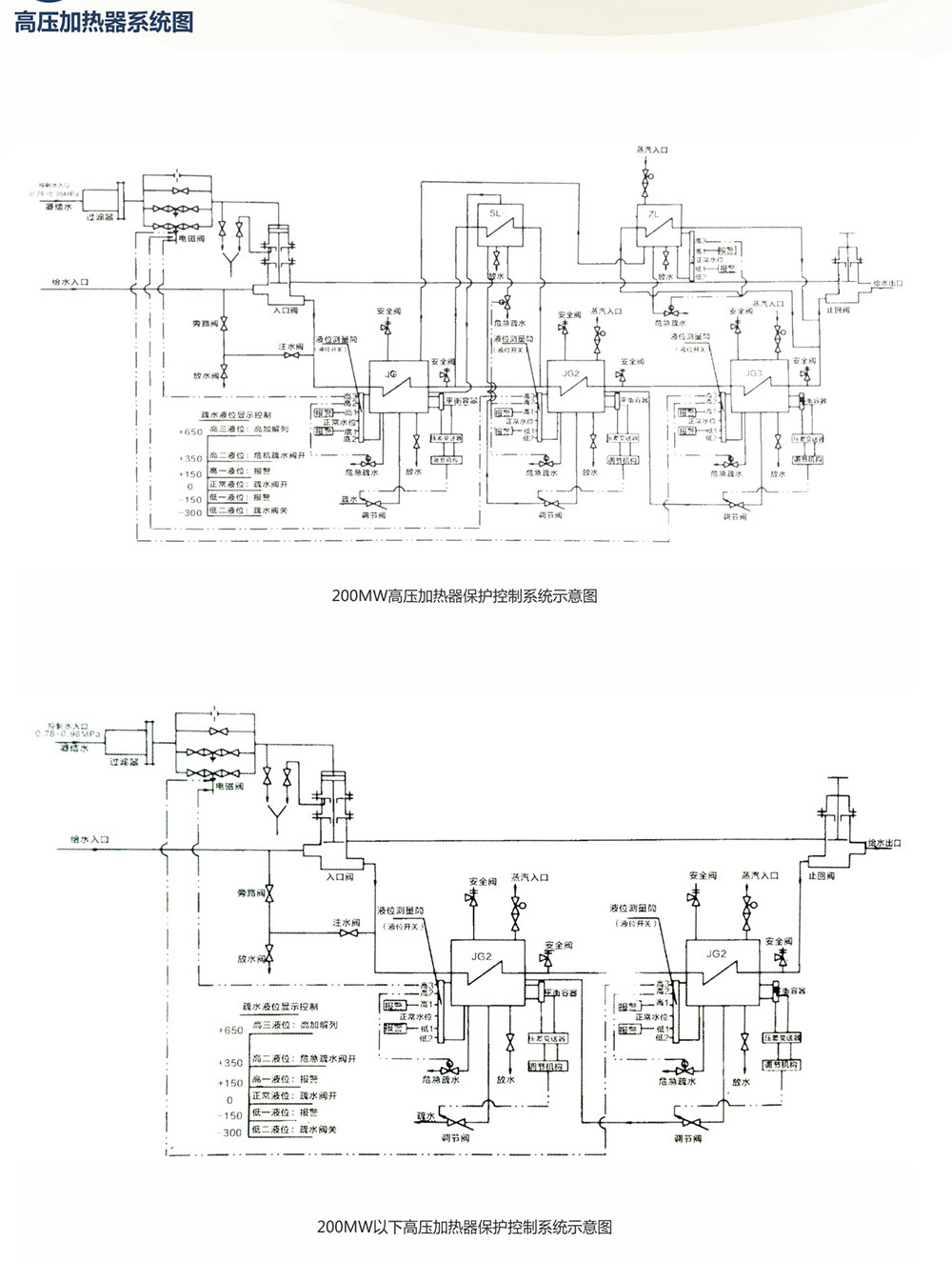
During the operation of the high-pressure heater, the thermal measurement signal of its drain water level is inconsistent with the actual water level. The actual water level is within the required range, but the thermal measurement signal shows a high or low value. When the signal is high, the emergency drain electric valve opens, leading to low or no water level operation in the high-pressure heater; when the signal is low, the emergency drain electric valve closes, and the drain water level rises, causing high-water level protection action and the automatic opening of the emergency drain electric valve. Whether the measured water level signal is high or low, it causes frequent opening and closing of the emergency drain electric valve, causing undue scouring, vibration, and overheating of the tube sheet, accelerating tube bundle damage. In addition, the emergency drain electric valve of the high-pressure heater is not tightly closed, causing internal leakage, and cannot maintain the qualified drain water level, causing the tube bundle to be subjected to long-term steam-water scouring, vibration, and tube sheet overheating.
4. Damage to surrounding tubes caused by tube bundle leakage
The tubes in the high-pressure heater are arranged tightly and orderly. Because the water-side pressure (21.4-24.5 MPa) is higher than the maximum steam-side pressure (4.8 MPa), when a tube is damaged and broken, a high-temperature, high-pressure water column continuously scours the surrounding tubes, causing large-scale leakage. In addition, the tube bundle inside the high-pressure heater is in a free state. When a tube breaks, under the action of high-speed water flow, the tube break freely swings and continuously impacts the surrounding tubes, causing certain damage to them.
5. Damage and destruction of the tube bundle by the working medium
(1) Scouring erosion
The tube bundle at the superheated steam cooling section and its outlet is easily eroded by wet steam. If the steam contains a certain amount of water, erosion damage will occur in the steam section. The tube bundle near the outlet of the steam cooling section is more likely to be eroded by steam and water. Scouring erosion is also common near the inlet of the drain cooling section.
(2) Erosion at the feedwater inlet end of the tube
The damaged part usually occurs within a range of about 200 mm from the feedwater inlet end of the tube bundle. Inlet tube end erosion is a process of combined erosion and corrosion. The principle is that the oxide film formed on the surface of the tube wall is destroyed and carried away by the high-turbulence feedwater. In this continuous process, the metal material is continuously lost, eventually leading to tube damage. Sometimes, the damaged area can extend to the tube end weld or even the tube sheet.
(3) Corrosion
Corrosion damage is a common form of damage to the tube bundle of a high-pressure heater. There are eight types: general uniform corrosion, galvanic corrosion, crevice corrosion, pitting corrosion, intergranular corrosion, selective leaching or segregation, erosion corrosion, and stress corrosion.
(4) Overpressure burst pipe
An increase in the outlet pressure of the feedwater pump may cause the tube bundle to exceed the design feedwater pressure and burst. This often occurs during the start and stop of the high-pressure heater.
6. Damage and destruction caused by self-vibration of the tube bundle
Tube bundle vibration is a common problem in shell-and-tube heat exchangers. The tube bundle with a certain elasticity will vibrate under the action of the disturbing force of the shell-side fluid. When the frequency of the excitation force coincides with the natural frequency of the tube bundle or its multiples, resonance will occur, and the amplitude will increase greatly, causing damage to the tube bundle. Forms of vibration damage: Vibration causes the stress at the connection between the tube and the tube sheet to exceed the fatigue endurance limit of the material, resulting in fatigue fracture of the tube; vibration causes friction and damage between the tube and the metal of the baffle in the tube hole of the support baffle; when the amplitude is large, the adjacent tubes in the span collide and rub against each other, causing wear or fatigue fracture of the tubes.
7. Poor repair process
During high-pressure heater shutdown and maintenance, incomplete leak checks of the high-pressure heater may occur due to various factors such as the technician's skills and professional ethics. Minor cracks at the expansion joint between the pipe and the tube sheet, and adjacent pipes around cracked pipes are not treated, especially those adjacent to broken pipes that have been severely damaged by high-pressure water flow and broken pipe collisions. Although there is no leakage, the ability to resist thermal and mechanical stress is already very low. When the high-pressure heater is started, the adjacent pipes around the broken pipe are subjected to a sudden increase in pressure and temperature, creating a potential for leakage. Zou County Power Plant has experienced multiple instances of large-scale leakage during the operation of high-pressure heaters after maintenance, which is caused by this factor.
High-pressure heater leak check
1. Leak check during high-pressure operation
Determine if there is any leakage in the tube bundle during the operation of the high-pressure heater. When the pressure signal or valve stem indicator shows that the valve is slightly open or is more open than the usual opening degree under this load condition, and the load is stable, this indicates that the drain outflow is greater than the high-pressure heater load, and the extra drain flow must come from pipe leakage. Simultaneously, judge whether the high-pressure heater is leaking based on the changes in the performance parameters of the high-pressure heater.
2. Leak check before starting the high-pressure heater
Close the steam-side drain valve and emergency drain electric valve, open the electric pump, supply water to the water side of the high-pressure heater, and observe the water level gauge on the steam side glass tube. When the steam side water level rises, the rising amount of water must come from the tube bundle leakage.
3. Leak check during maintenance
Close the emergency drain electric valve, steam inlet valve, steam side drain valve, and the valves before and after the drain of the preceding stage and this stage to the next stage of the high-pressure heater, completely isolating the steam side of the high-pressure heater. Inject compressed air through the bypass valve on the steam side of the high-pressure heater. In the water chamber of the high-pressure heater, use a candle to check for leaks at each pipe opening on the tube sheet. If the candle flame is blown or extinguished, the pipe is leaking; if the wind pressure from the leaking pipe is close to or equal to the compressed air pressure, then the pipe is broken.



Welcome to Leave a Message