


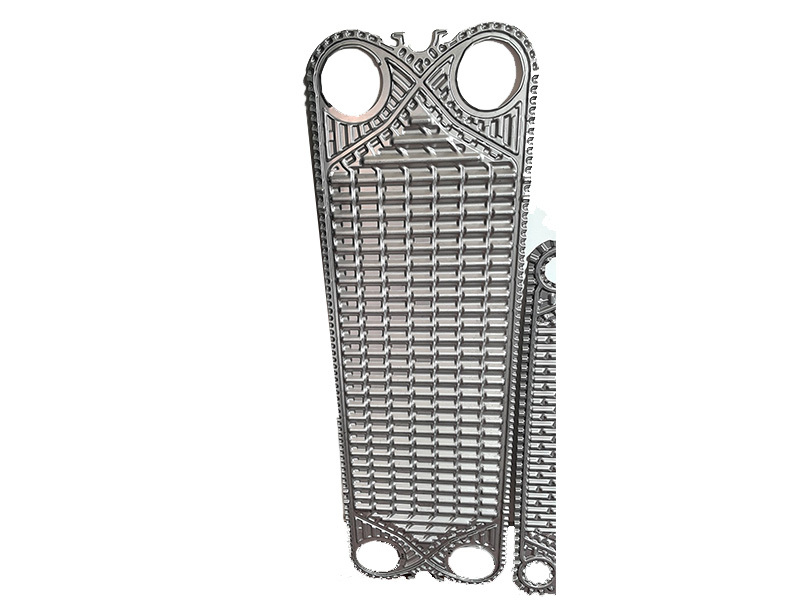
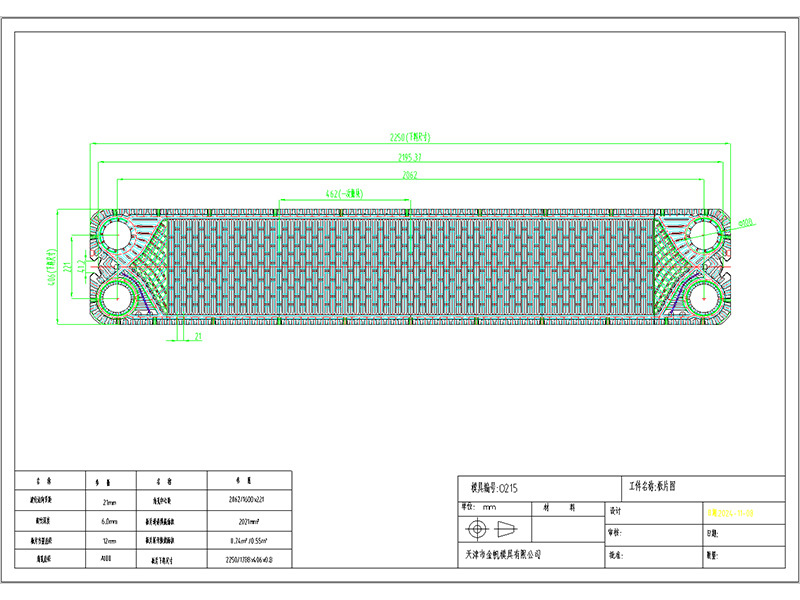
Wide-flow channel free-flow plate heat exchanger
Keywords:
Product Category:
Wide-flow channel free-flow plate heat exchangers are special plate heat exchangers designed for handling high-viscosity media containing particles or fibers.
Structural Features
Wide-flow channel design: The flow channel width is relatively large, typically between 5mm and 12mm, with no obstructions in the cross-section. This effectively prevents the deposition and blockage of solid particles or suspended matter in the medium.
Plate structure: The plates are usually thicker and employ a special coarse corrugated structure design. The outer contour of the plates is mainly composed of horizontal corrugations, forming an S-shaped flow channel. This design not only enhances the strength of the plates but also improves heat transfer efficiency.
Sealing material: Corrosion-resistant and high-temperature-resistant sealing materials are selected based on the corrosiveness and temperature characteristics of the medium. Some models use a double-line sealing structure to enhance sealing performance.
Modular design: The heat exchanger adopts a modular design, and the plates can be disassembled for cleaning, facilitating maintenance and replacement.
Working Principle
Wide-flow channel free-flow plate heat exchangers perform heat exchange through the flow channels between the plates. Cold and hot media flow on both sides of the plates, transferring heat through the plates. The unique flow channel design and corrugated structure enable high turbulence even at low flow rates, resulting in a heat transfer coefficient far higher than that of traditional shell-and-tube heat exchangers.
Main Advantages
Anti-clogging: The wide-flow channel design is suitable for handling high-viscosity media containing particles or fibers, effectively reducing the risk of clogging.
High-efficiency heat transfer: The special corrugated design and flow channel structure enable high turbulence even at low flow rates, resulting in high heat transfer efficiency.
Easy maintenance: The plates can be disassembled for cleaning, with minimal residual liquid inside, making maintenance convenient.
Strong applicability: Suitable for various media and operating conditions, including heat transfer conditions involving solids, crystals, fibers, slurries, and high-viscosity media.
Good economy: Small size and small footprint reduce initial system investment and operating and maintenance costs.
Application Areas
Chemical industry: Handling high-viscosity fluids and media containing particles.
Food industry: Used for high-viscosity fluids such as fruit juice and dairy products.
Pharmaceutical industry: Handling pharmaceutical liquids containing fibers or particles.
Environmental protection industry: Used in wastewater treatment and sludge treatment.
Sugar, papermaking, and textile industries: Handling media containing fibers, particles, or slurries.
Selection Considerations
Medium characteristics: Consider the viscosity, particle size, and fiber content of the medium.
Operating conditions: Including temperature, pressure, and flow rate.
Material selection: Select appropriate plates and sealing materials based on the corrosiveness and temperature of the medium.
Maintenance requirements: Consider the convenience of cleaning and maintenance.
Maintenance and Care
Regular cleaning: Prevent scaling and clogging.
Inspect seals: Regularly replace aged or damaged seals.
Monitor performance: Regularly check heat transfer efficiency and pressure drop to ensure normal equipment operation.
Wide-flow channel free-flow plate heat exchangers are widely used in various industries due to their anti-clogging, high-efficiency heat transfer, and easy maintenance characteristics. Correct selection and regular maintenance are key to ensuring their efficient operation.


Shallow, closely spaced corrugated plate type

Welcome to Leave a Message